
House construction in Uganda takes a family home from an empty plot to a finished building: approved plans, foundation, walls, roof, plumbing, wiring and finishes. Most homes here are built from concrete blocks or burnt bricks with a timber or steel roof, either as a bungalow or as a storeyed house on a concrete frame.
Building Construction Company Uganda builds houses across Uganda. This page explains what house construction includes, how the work is staged, what affects the cost and how to get an accurate quote.
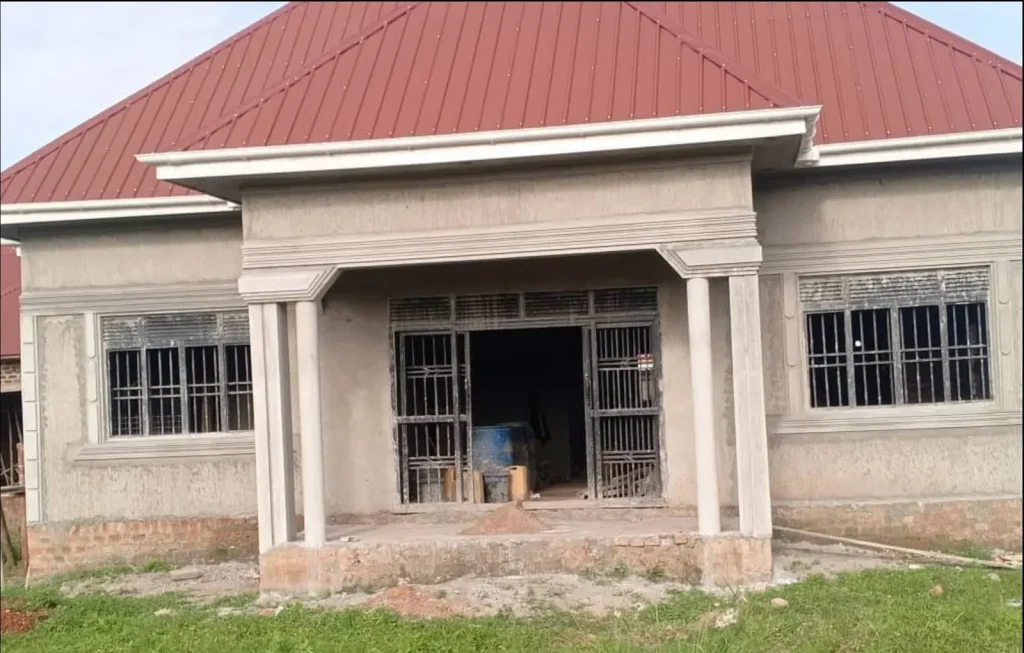
What our house construction service includes
A full house construction project covers:
- reviewing your architectural and structural drawings, and preparing a priced bill of quantities (BOQ);
- site clearing, setting out and excavation;
- the foundation and ground floor slab;
- walling, columns, beams and, for storeyed houses, the floor slabs;
- the roof structure and covering;
- plumbing and electrical installation;
- plastering, flooring, ceilings, doors, windows and painting;
- handover of the finished house.
Types of houses we build
Bungalows
Single-storey homes, the most common type of house in Uganda. A bungalow is quicker to build and needs a lighter foundation than a storeyed house, but uses more land for the same floor area.
Storeyed houses
Two or more floors on a reinforced concrete frame. A storeyed house makes better use of a small plot, which is why it is common in and around Kampala, but it needs a structural engineer’s design and more careful supervision.
Rental units
Rows or blocks of rental units, often built in phases as the owner’s budget allows. Planning the phases at the start avoids rework later.
Whatever the type, 2-, 3- and 4-bedroom layouts are the most common. You can see houses we have worked on in our projects.
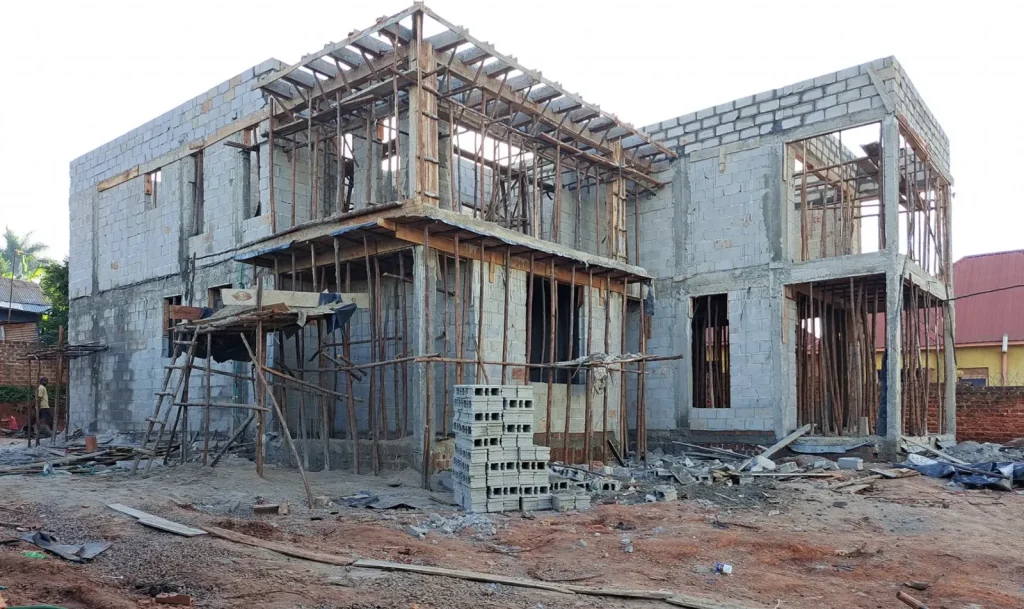
How we build a house
- Plans and BOQ We review your approved drawings and price every stage of the work in a bill of quantities.
- Contract We agree the scope, the price, the payment stages and the programme with you in writing.
- Foundation Setting out, excavation, the foundation and the ground floor slab, following the structural design.
- Walling Walls up to the ring beam, with columns and slabs if the house is storeyed.
- Roofing Roof trusses and covering. The house is now weather-tight.
- Services Plumbing and electrical work, run before the walls are plastered.
- Finishes Plaster, floors, ceilings, doors, windows, fittings and painting.
- Handover We walk through the house with you and hand it over.
Our guide on how to build a house in Uganda covers the owner’s side of the process, from buying land to moving in.
What affects the cost of building a house
Two houses with the same number of bedrooms can cost very different amounts. The main factors are:
- Floor area and storeys. The bigger the house, the more it costs, and a storeyed house needs a concrete frame and a heavier foundation.
- Soil and slope. Soft soil, a high water table or a steep plot can call for a deeper or reinforced foundation.
- Walling. Concrete blocks, burnt bricks and other walling materials differ in price, in how fast they are laid and in how much plaster they need.
- Roof. Iron sheets, tiles and concrete slabs differ in price, and so do timber and steel trusses.
- Finishes. Tiles, ceilings, doors, windows, kitchen fittings and bathrooms can change the final price more than the structure.
- Location. Transport for materials and workers adds to the cost of remote sites.
See our guides to the cost of building a house in Uganda and the cost of a 3-bedroom house. For an exact figure, we price your own drawings.
Materials
We build to the specification in your drawings and BOQ. Common choices in Uganda include:
- Foundation: concrete strip footings with block or stone foundation walls, or a reinforced concrete foundation where the soil or the design needs it.
- Walls: concrete blocks or burnt clay bricks.
- Frame: reinforced concrete columns, beams and slabs for storeyed houses.
- Roof: treated timber or steel trusses with pre-painted iron sheets, clay tiles or stone-coated steel tiles.
Agree the materials in writing before work starts, so you and the contractor are pricing the same house.
Plans, approval and permits
You need approved plans before you build. The architect prepares the drawings, a structural engineer designs the structure of a storeyed house, and the plans go to KCCA in Kampala or the local council elsewhere. Building without approval can lead to fines, a stop order or demolition. See our guide to building permits in Uganda.
How to choose a house construction company
Before you sign with any company, including us:
- ask for its registration certificate, and confirm it with the Uganda Registration Services Bureau (URSB);
- visit houses it has worked on, and talk to the owners if you can;
- compare BOQs from more than one company, line by line;
- agree a written contract with payments tied to stages of the work, not a large sum up front;
- find out who will supervise your site day to day.
Read more on choosing a construction company, or see all construction services in Uganda.
Frequently asked questions
How long does it take to build a house in Uganda?
It depends on the size and design of the house, the approvals and how steadily it is funded. A house that is paid for stage by stage as planned is built much faster than one where work stops while the owner raises money. Agree a programme with your contractor before work starts.
Can I build my house in phases?
Yes. Many owners in Uganda build in phases, for example up to the roof first and the finishes later. Plan the phases with your contractor at the start, and protect unfinished work from the weather between phases.
Do I need a structural engineer for a house?
A storeyed house needs a structural engineer’s design for the frame, slabs and foundation, and approval authorities expect one. For a bungalow on poor soil, an engineer’s advice on the foundation is also worth having.
Which is better, concrete blocks or burnt bricks?
Both are widely used in Uganda. Blocks are larger and quicker to lay; bricks are traditional and can be left exposed. The right choice depends on the design, the budget and what is available near your site.
Do you build houses outside Kampala?
Yes. We are based in Kampala and build across Uganda. Tell us where your plot is when you request a quote.