
Roofing contractors in Uganda build the roof structure, usually timber or steel trusses, and fix the roof covering, such as pre-painted iron sheets, clay tiles or stone-coated steel tiles. A good roof is designed for the span of the building and for heavy tropical rain, uses treated or rust-protected materials, and is fixed so that it stays watertight and secure in strong wind.
Building Construction Company Uganda does roofing on new and existing buildings across Uganda. This page explains the main roofing options, how a roof is built and how to get a quote.
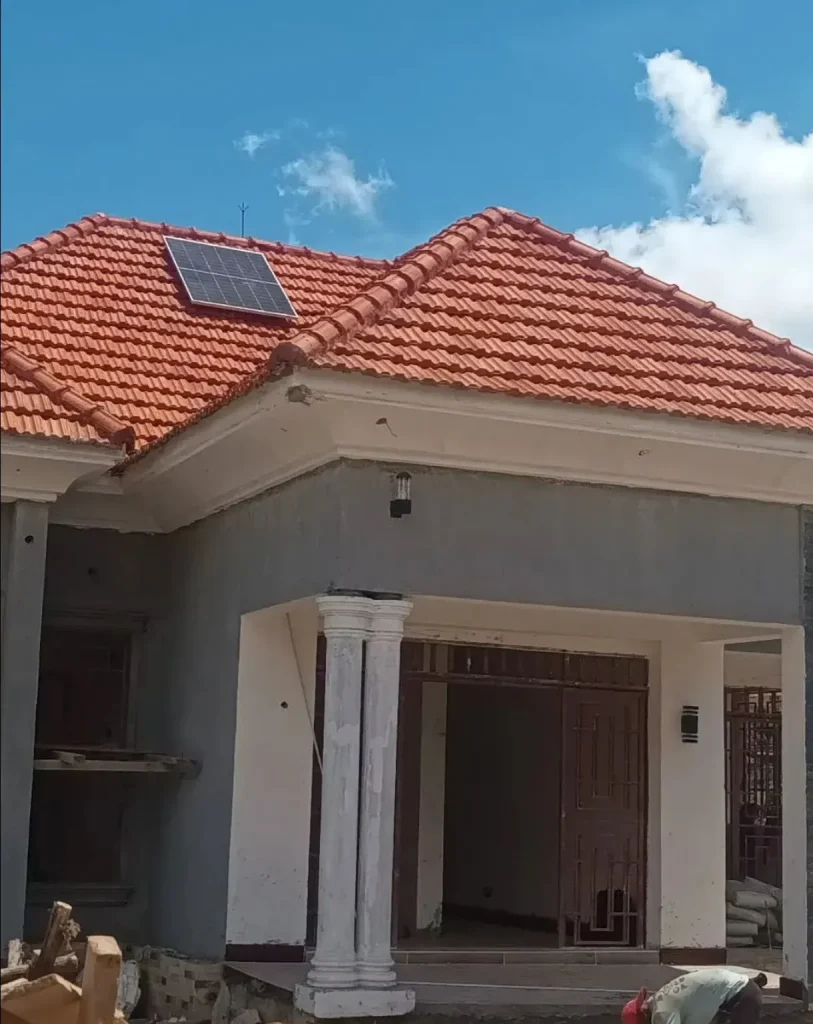
Roof coverings used in Uganda
Iron sheets
Corrugated or box-profile iron sheets, often pre-painted, are the most widely used roof covering in Uganda. They are light, quick to fix and need lighter trusses than tiles. Thicker gauges last longer and resist denting, and the coating protects against rust. Iron sheets can be noisy in heavy rain unless the roof has a ceiling and insulation.
Clay tiles
Clay tiles are heavy, so they need stronger trusses, but they are quiet in the rain and keep the house cool. Broken tiles can be replaced one at a time.
Stone-coated steel tiles
Steel sheets pressed to look like tiles and coated with stone chips. They give a tiled look at a fraction of the weight of clay tiles.
Concrete roof slabs
A flat reinforced concrete slab, used on storeyed and commercial buildings or where the owner plans to add a floor later. It must be waterproofed and laid to falls so rainwater drains away.
Roof structures
- Timber trusses. The most common choice for houses. Timber must be properly seasoned and treated against termites and rot, and the trusses sized for the span and the weight of the covering.
- Steel trusses. Light-gauge or structural steel trusses resist termites and suit wider spans, such as halls, schools and warehouses. They must be protected against rust.
The roof shape also matters. Hip roofs slope on all four sides and resist wind well; gable roofs are simpler to build; mono-pitch roofs suit modern designs and extensions. You can see a timber hip roof frame going up on one of our projects.
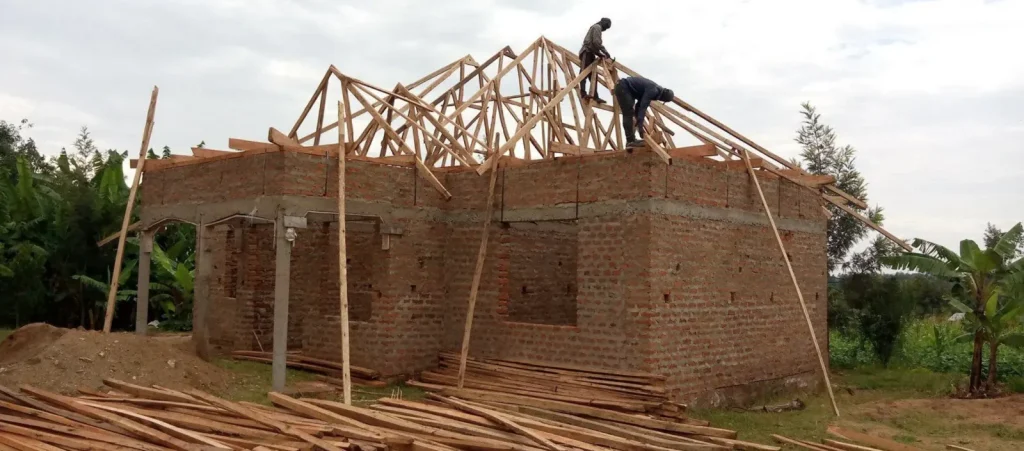
How we build a roof
- Survey and design We check the drawings, the span and the wall plate, and agree the structure and covering.
- Quote We price the roof in a bill of quantities: trusses, purlins, covering, fixings, gutters and labour.
- Wall plate and trusses Trusses are fixed to the ring beam or wall plate and braced.
- Purlins and covering Battens or purlins are fixed, then the sheets or tiles, with the right overlaps and fixings.
- Ridges, flashing and gutters Ridges, valleys and flashings are sealed, and gutters and downpipes fitted.
- Inspection and handover We check the roof for gaps, loose fixings and drainage before handover.
Roofing on existing buildings
On an existing building, the first job is to find out why the roof is failing. Common problems in Uganda include:
- Leaks from rusted or lifted sheets, worn-out fixings, or poorly sealed ridges, valleys and flashings.
- Rust on old or thin iron sheets, especially where the coating has worn off.
- Termite and rot damage to untreated timber trusses.
- Sagging where the trusses were too small for the span or the covering.
- Wind damage where sheets were not fixed securely to the purlins.
Depending on the condition of the structure, the answer may be a repair, new covering on the existing trusses, or a complete new roof.
Iron sheet gauge, profile and finish: what to ask
Iron sheets in Uganda are sold by gauge, profile and finish, and the three together decide how long the roof lasts. When you compare quotes, make sure each one names all three.
- Gauge (thickness). A lower gauge number means a thicker sheet: gauge 28 is thicker and stronger than gauge 30 or 32. Thicker sheets resist denting, wind and rust for longer, and cost more.
- Profile. Corrugated sheets are the traditional choice. Box profile and tile profile sheets give a modern look and stiffer sheets, but need matching ridges, flashings and fixings.
- Finish. Plain galvanised sheets are the cheapest. Aluminium-zinc coated and pre-painted sheets resist rust better and keep their colour for longer.
- Fixings and accessories. Roofing screws or nails with washers, ridge caps, valley gutters and flashings should match the sheet, or the roof leaks at the joints.
Gutters, fascia and roof drainage
Uganda’s heavy rain makes the roof edge as important as the covering. Fascia boards close the ends of the rafters and carry the gutters. Gutters and downpipes should be sized for the roof area and lead the water away from the foundation, into a drain, a soak pit or a water tank. Wide eaves protect walls and windows from rain and sun. Many owners also harvest rainwater from the roof, which needs clean gutters, a first-flush device and a tank stand.
Roof leaks: repair or replace?
Most leaks start at the details, not in the middle of a sheet: loose or rusted fixings, a lifted ridge cap, a blocked valley gutter, a cracked tile or a poor seal around a chimney or pipe. These can be repaired. Replacement makes sense when the sheets are rusted through over large areas, the timber is rotten or eaten by termites, or the trusses have sagged. A roofer should inspect the roof from above and the timber from the ceiling space before advising which.
What affects the cost of a roof
- Roof area and shape. Hip roofs and roofs with many valleys need more material and labour than a simple gable.
- Covering. Iron sheets, stone-coated steel tiles and clay tiles differ in price, and heavier coverings need stronger trusses.
- Structure. Treated timber or steel, and the span.
- Extras. Ceilings, insulation, fascia boards, gutters and downpipes.
- Access. Storeyed buildings need more scaffolding and lifting.
Choosing a roofing contractor
- Ask for the company’s registration certificate, and confirm it with URSB.
- Ask to see roofs it has built, and check the finish at the ridges, valleys and gutters.
- Make sure the quote states the gauge and type of sheets or tiles, and whether the timber is treated.
- Agree in writing what happens if the roof leaks after handover.
Roofing is one stage of house construction. If you are building in the capital, see construction companies in Kampala. For the whole building, see building contractors in Uganda or all our construction services in Uganda.
Frequently asked questions
Which roofing material is best in Uganda?
Pre-painted iron sheets are the most popular because they are light, affordable and quick to fix. Clay tiles are quieter and cooler but need stronger trusses. Stone-coated steel tiles give a tiled look at a lighter weight. The best choice depends on the design, the budget and the structure.
Timber or steel trusses?
Treated timber trusses are the usual choice for houses. Steel trusses resist termites and suit wider spans, such as halls and warehouses. Either must be sized for the span and the weight of the covering.
Why does my iron sheet roof leak?
The usual causes are rusted sheets, worn or loose fixings, sheets that do not overlap enough, and poorly sealed ridges, valleys or flashings. A roof inspection finds the cause before you decide between a repair and a new roof.
Do you do roofing outside Kampala?
Yes. We are based in Kampala and work across Uganda. Tell us where the building is when you request a quote.