
Commercial construction in Uganda is the building of premises for business use: shops, offices, schools, hotels, clinics and mixed-use blocks with shops below and offices or flats above. These projects need a full structural design, approvals that go beyond those for a house, and a contractor who can plan the work around a fixed opening date and a tight budget.
Building Construction Company Uganda builds commercial premises across Uganda. This page explains what a commercial project involves, what affects the cost and how to get an accurate quote.
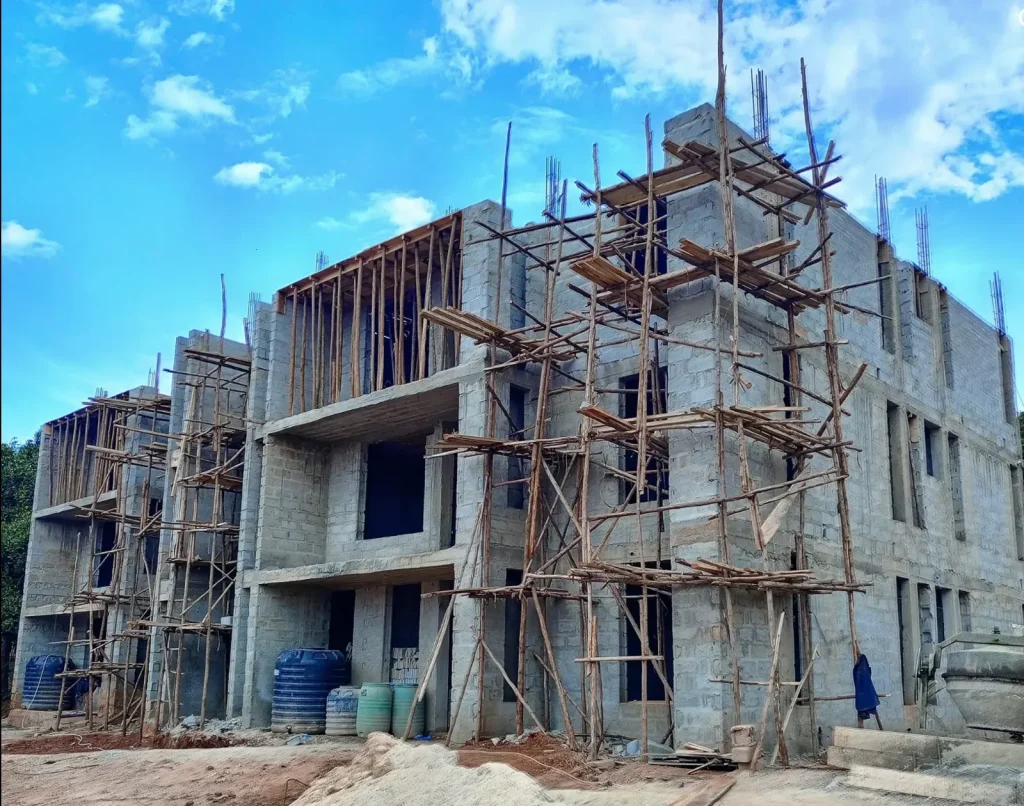
Commercial buildings we build
Shops and retail
Single shops, rows of lock-up shops and ground-floor retail units in mixed-use buildings, with wide openings, durable floors and secure shutters.
Offices
Office blocks and office floors over shops. Offices need open floor plates, good natural light and ventilation, and space for electrical, data and plumbing services.
Mixed-use buildings
Shops on the ground floor with offices or flats above are common on main roads in Kampala and other towns, because the rent from the shops helps pay for the building.
Schools, hotels and clinics
Classroom blocks, dormitories, guest houses, hotels and health facilities each have their own design standards and inspections, set by the ministry or authority responsible.
What our commercial construction service includes
- reviewing the architectural, structural and services drawings, and pricing them in a bill of quantities;
- planning the programme around your opening date, including phased handover where it helps;
- foundations, the reinforced concrete frame, floor slabs and walling;
- roofing, whether sheets on trusses or a concrete roof slab;
- coordinating the specialist trades: electrical, plumbing, fire protection and any lifts;
- finishes, external works, parking and drainage;
- handover of the finished building.
How a commercial project runs
- Brief and design Your architect and engineers prepare the drawings to suit the business that will use the building.
- Approvals The plans go to KCCA or the local council. Larger projects may also need an environmental assessment and fire safety review.
- BOQ and contract We price the drawings in a BOQ and agree the scope, price, payment stages and programme in writing.
- Substructure Excavation, foundations and the ground floor slab.
- Frame and envelope Columns, beams, slabs, walls and roof, floor by floor.
- Services and finishes Electrical, plumbing, fire protection and finishes, with inspections at each stage.
- Handover Final inspections, snagging and handover so the business can move in.
Approvals for commercial buildings
Commercial buildings need more than an approved architectural plan:
- Structural design by a registered engineer, submitted with the plans.
- Planning approval from KCCA in Kampala or the local council elsewhere, which checks that the use is allowed on the plot.
- Environmental assessment. Some larger projects need an environmental and social impact assessment approved by the National Environment Management Authority (NEMA).
- Fire safety. Buildings open to the public need fire exits, fire-fighting equipment and inspection by the fire authority.
- Occupation permit before the building can be used.
See our guide to building permits in Uganda.
What affects the cost of a commercial building
- Floor area and number of floors. Taller buildings need heavier foundations and frames, and may need lifts.
- Structure. Long spans for open-plan shops and offices need deeper beams or a steel frame.
- Services. Electrical capacity, plumbing, fire protection and air conditioning add significantly to the cost.
- Finishes. Shopfronts, glazing, floor finishes and cladding vary widely in price.
- Site. Soil, slope and access, and in towns, working next to roads and neighbours.
See our guide to the construction cost per square metre. For an exact figure, we price your drawings.
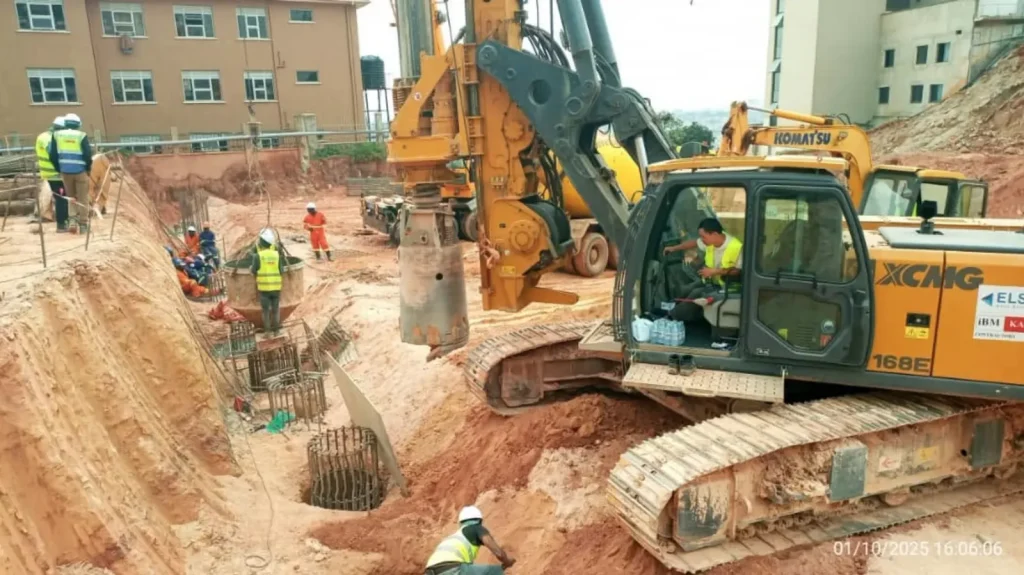
Choosing a commercial construction company
On a commercial project, delays cost you rent and trading time. Before you sign, ask any company you are considering:
- for its registration certificate, and confirm it with URSB;
- for commercial buildings it has worked on, and visit one if you can;
- how it will manage the specialist trades and subcontractors;
- who will run the site, and how progress will be reported to you;
- for a programme with key dates, and how delays will be handled in the contract.
For larger projects, you may want one company to manage the whole job as general contractor, or to appoint a construction manager. For a warehouse or factory, see industrial construction. You can also browse our projects and read about choosing a construction company in Uganda. See all our construction services in Uganda.
Frequently asked questions
What counts as commercial construction?
Any building for business or public use: shops, offices, schools, hotels, clinics and mixed-use buildings. Warehouses and factories are usually treated separately as industrial construction.
Do commercial buildings need different approvals from houses?
Yes. As well as planning approval, they usually need a registered engineer’s structural design and a fire safety review, and some larger projects need an environmental assessment approved by NEMA. An occupation permit is needed before the building is used.
Can a commercial building be built in phases?
Yes. A mixed-use building is often built with the ground floor finished and let first, and the upper floors completed later. The structure must be designed for the full height from the start.
Do you build commercial premises outside Kampala?
Yes. We are based in Kampala and work across Uganda. Tell us where your site is when you request a quote.