
A building contractor in Uganda is a company or person who takes on the construction of your building and is responsible for the work on site. Some build houses, some build commercial and industrial premises, and some manage the whole project as general contractor. This page explains the types of contractor, labour-only and labour-and-materials contracts, and how contractors are paid.
We are Building Construction Company Uganda, a building contractor and construction company on Kampala Road in Kampala, and our founders bring 20+ years of construction experience. We work as main contractor on houses, commercial and industrial buildings.
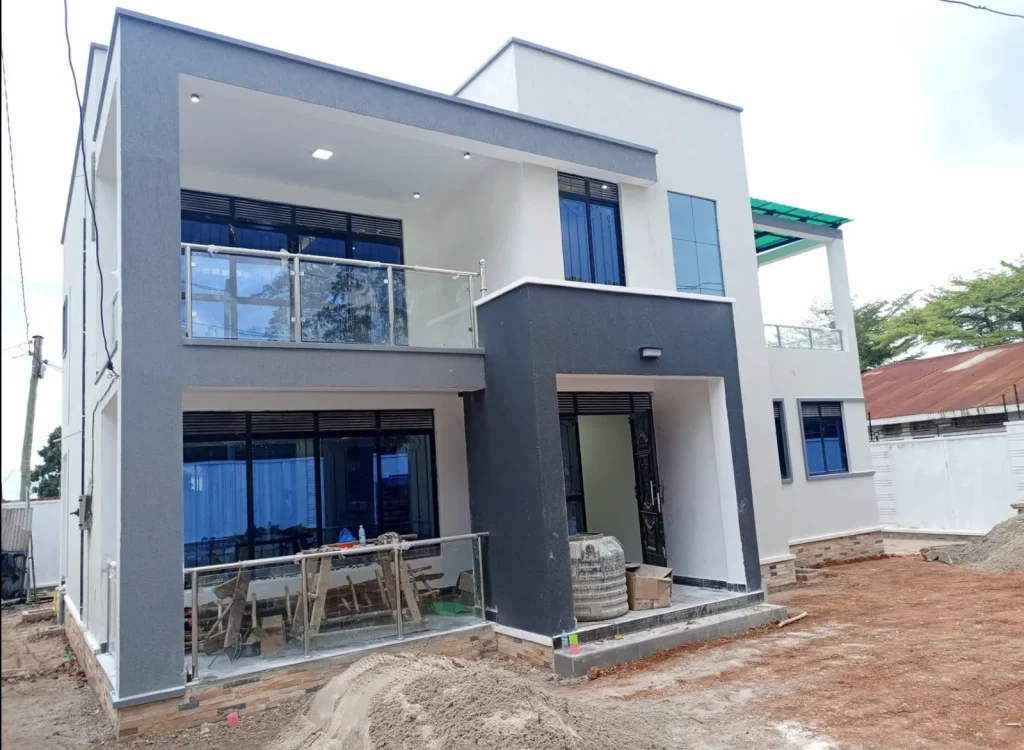
What a building contractor does
A contractor turns drawings into a finished building. On a typical project the contractor:
- reads the architectural and structural drawings and prices them in a bill of quantities (BOQ);
- agrees the scope, the price, the payment stages and the programme in a written contract;
- organises the site, the labour, the materials and any specialist trades such as electrical, plumbing and roofing;
- builds to the drawings and the building regulations, and corrects defects;
- hands the building over to you.
A contractor does not replace the architect or the engineer. They design the building and, on many projects, inspect the work. The contractor builds it.
Types of building contractor
Main contractor and general contractor
A main contractor builds the whole building under one contract. A general contractor also coordinates the other trades and consultants. See general contracting for how this works and when it makes sense.
Residential contractors
Residential contractors build houses, bungalows, storeyed homes and rental units. See house construction and home builders in Uganda.
Commercial and industrial contractors
Offices, shops, hotels, warehouses and factories have different structural, fire-safety and services requirements. See commercial construction and industrial construction.
Specialist and sub-contractors
Roofers, electricians, plumbers, piling and earthworks firms usually work for a main contractor, but you can also hire them directly. See roofing contractors in Uganda.
Labour only, or labour and materials?
Contractors in Uganda commonly offer two arrangements.
- Labour only. You buy the materials and the contractor supplies the workers. You control the quality of the materials, but you manage the purchasing, deliveries and waste.
- Labour and materials. The contractor prices and supplies both. One company is responsible for the cost and the quality, and you deal with one party.
Whichever you choose, put it in the contract, and make sure the BOQ lists every material and its specification.
Main contractor, subcontractor or fundi?
| Who | Contract with | Responsible for |
|---|---|---|
| Main (building) contractor | You, the owner | The whole building: labour, usually materials, supervision, programme and defects |
| Subcontractor | The main contractor | One package, such as roofing, electrical, plumbing, piling or aluminium windows |
| Fundi (individual tradesperson) | Whoever hires them, often directly by the owner | Their own trade, paid by the day, the task or the stage |
| Labour gang leader | The owner or the contractor | Supplying workers; the owner or contractor supervises |
The difference matters when something goes wrong. With a main contractor, one party answers for the whole building. When you hire fundis and subcontractors directly, you coordinate them and you carry the gaps between trades.
How contractors are paid in Uganda
Building contracts in Uganda are usually paid in stages, each released when a stage is complete and checked:
- Mobilisation (a modest first payment, if agreed) for setting up the site.
- Substructure: setting out, excavation, foundation and ground slab.
- Superstructure: walls up to the ring beam, with columns and slabs for storeyed buildings.
- Roofing: roof structure and covering.
- Services and finishes: plumbing, wiring, plaster, floors, ceilings, doors, windows and paint.
- Practical completion and handover.
- Retention: a small share held back until the end of the defects period, then paid once defects are fixed.
Link payments to work done, never to dates alone, and write the stages, the amounts and the retention into the contract. See construction contracts in Uganda.
Choosing a building contractor
The short version: check the registration, see finished work, compare bills of quantities line by line from the same drawings, meet the person who will run your site, and sign a written contract with staged payments. The full step-by-step process is in how to choose a construction company in Uganda, and the questions to use in the meeting are in questions to ask a building contractor.
What a contractor needs from you
- Approved drawings. Architectural and, for storeyed buildings, structural drawings approved by the authority. See building permits in Uganda.
- A clear brief. The type of building, the number of floors, the finishes you expect and your target date.
- A budget range. It helps the contractor propose the right specification. Read construction costs in Uganda to plan it.
Where we work
We are based in Kampala and work on projects across Uganda. For building in the capital, see construction companies in Kampala. You can also browse our projects for photos of buildings we have worked on.
Frequently asked questions
What is the difference between a building contractor and a construction company?
In practice the terms overlap. A construction company is usually a registered business that builds for clients, and a building contractor is the party that holds the building contract. Many construction companies act as building contractors.
Should I hire a contractor or manage the build myself?
Managing the build yourself saves the contractor’s margin, but you take on buying, supervising and fixing mistakes. Owners with no building experience usually do better with a contractor and a written contract.
What is retention in a building contract?
A small share of each payment, held back until the defects period ends. It is paid once the contractor has fixed any defects found after handover.
How many quotes should I get?
Two or three, all priced from the same drawings. If the drawings differ, the totals cannot be compared.
Do I need approved plans before a contractor starts?
Yes. Building without approval can lead to fines, a stop order or demolition. Your architect prepares the submission, and the plans go to KCCA in Kampala or the local council elsewhere.
Can you build outside Kampala?
Yes. We are based in Kampala and work across Uganda. Tell us where your site is when you request a quote.