
Part of our guide to Construction Companies in Uganda
The construction process in Uganda runs from site preparation to handover, in stages that each cover the one before. This guide follows the build on site, stage by stage, and says what to inspect at each point, because most defects are hidden once the next stage is built. For the owner’s journey from land to keys, read the owner’s journey from land to keys.
It follows the order of work on our own sites, from setting out to handover, with the checks to make at each stage. Our founders bring 20+ years of construction experience.
1. Site preparation and setting out
The site is cleared, levelled and marked out from the drawings. Check: the building sits where the approved plan says, the corners are square, and the levels are right before excavation starts.
2. Excavation and foundation
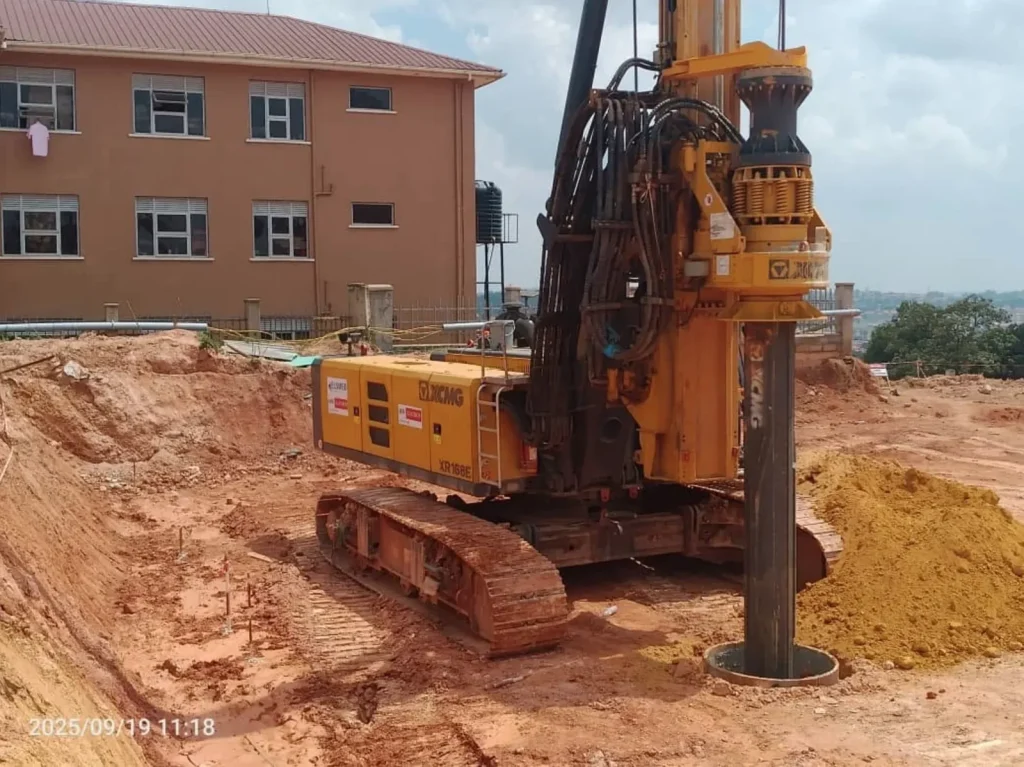
Trenches or pits are dug to the depth in the design, then reinforced and filled with concrete. Large buildings may need piles. Check: the depth and the soil at the bottom of the trench, the reinforcement size and spacing, and the concrete mix. Inspect the steel before the concrete is poured, because it cannot be seen afterwards.
3. Ground slab and damp-proofing
The floor slab is cast on compacted fill with a damp-proof layer. Check: the compaction of the fill, the damp-proof membrane and the level of the slab.
4. Superstructure: columns, beams and walls
Columns and beams form the frame and blocks fill the walls. Upper floors are cast on formwork. Check: the reinforcement in every column, beam and slab, the formwork, the verticality of walls and the curing of the concrete.
5. Roof
Trusses are fixed to the wall plate and covered with sheets or tiles. The building is weathertight once the roof is on and the openings are closed. Check: truss size and spacing against the drawing, the fixings, and the overlaps and flashings. See roofing contractors in Uganda.
6. Services
Electrical conduits and plumbing pipes are laid in walls and floors before plastering. Check: the routes and the pressure test on pipes before they are covered.
7. Plastering, floors and ceilings
Walls are plastered, floors are screeded and tiled, and ceilings are fixed. Check: straight and level surfaces, sound plaster, tiles that are firm and evenly set.
8. Doors, windows and fittings
Frames, doors, windows, sanitary ware and electrical fittings are installed. Check: that they open and close, seal and match the specification.
9. Painting and external works
Walls are painted and the compound is paved and drained. Check: the finish, the drainage away from the house and the access.
10. Handover
Walk through with the builder, list every defect, agree when each will be fixed, and confirm what guarantee the contract gives. Keep the drawings, receipts and any test results.
Managing the process
A written contract, a priced BOQ and regular site visits keep a build on track. For larger projects consider construction management, and see the construction timeline guide for how long each stage can take.
Frequently asked questions
What are the stages of construction?
Site preparation, foundation, ground slab, superstructure, roof, services, plastering and floors, doors and windows, painting and external works, and handover.
Which stage needs the most inspection?
The foundation and the reinforcement, because they are covered by later work and are hard to fix.
Why are services installed before plastering?
Pipes and conduits are laid in the walls and floors, so they must be in place and tested before the walls are closed.
What is the difference between this guide and how to build a house?
How to build a house follows the owner’s steps from land to keys. This guide follows the work on site and what to inspect.
What should I do at handover?
Walk through with the builder, list every defect, agree when each will be fixed and keep all documents.